
Your front yard is the first part of your home people see, but it can also become one of the most time consuming areas to maintain. Lawns need mowing, weeds keep returning, garden beds dry out and poorly planned slopes or drainage can create extra work after wet weather.
A low maintenance front yard is different. It is designed from the beginning to stay neat with less mowing, watering, trimming and weeding.
For Hobart homes, good landscaping in Hobart also needs to consider local conditions. Greater Hobart includes exposed sites, sloping blocks, cool winters, dry periods, coastal influences and areas with bushfire risk. A design that suits the actual property will usually perform better than simply copying a garden from another climate.
This guide explains how to create a practical, attractive and low maintenance front garden without making the space feel bare.
Before choosing plants or materials, think about what currently takes the most time.
For many homeowners, it is one or more of these:
A good low maintenance landscape design should remove unnecessary work rather than simply add new features.
If you are planning more than the front garden, our guide to backyard landscaping ideas for modern Hobart homes explains how the same practical approach can be used across the rest of the property.
A large front lawn can look attractive, but it also creates regular mowing, edging, watering and lawn repair.
You do not necessarily need to remove every patch of grass. Instead, keep lawn where it improves the design and replace awkward sections with easier surfaces.
Areas beside driveways, narrow strips, steep sections and heavily shaded spots are often the first places to reconsider.
Possible alternatives include:
For homeowners who want a consistently green surface without mowing, professionally installed artificial grass in Hobart can be useful in selected front yard areas. It works best when the base, edging and drainage are properly prepared.
One of the easiest ways to create extra garden work is to choose plants that do not suit the property.
Before planting, check:
Plants that naturally suit the conditions usually need less intervention once established.
The City of Hobart encourages water sensitive garden design and the use of plants suited to local conditions. Tasmanian native and climate suited plants can also support local habitat while helping create a garden that feels appropriate to the area.
A low maintenance front garden does not need dozens of different species.
Repeating a smaller number of hardy plants can make the garden look more organised and simplify watering and pruning.
Try combining:
Choose mature plant sizes carefully so shrubs do not need constant cutting back from paths, windows or driveways.
Bare soil creates unnecessary maintenance. It loses moisture more quickly and gives weed seeds an easier place to establish.
Organic mulch can help:
A well mulched bed is generally easier to manage than exposed soil.
If you are comparing ground cover options, read our guide on how mulch and pebbles can reduce garden maintenance. For installation options, see our mulch and pebble landscaping services.
Decorative pebbles can create a clean, modern front yard and do not break down like organic mulch.
They work particularly well for:
However, covering the whole front garden in stone is not always the best answer. Pebbles can become hot in strong sun and leaves can collect between them.
A balanced design often works better, with mulch around planted beds and pebbles used for selected feature or practical zones.
A defined path makes a front yard easier to use and easier to maintain.
Without a clear route to the front door, people may walk across lawn or soil, creating worn patches and mud.
Concrete paving in Hobart is a practical choice for front paths because it provides a durable, stable surface that is easy to clean. Pavers can also be combined with pebbles, planting or lawn to soften the overall look.
Keep the route simple. A clear path with fewer awkward corners is generally easier to sweep, edge and maintain.
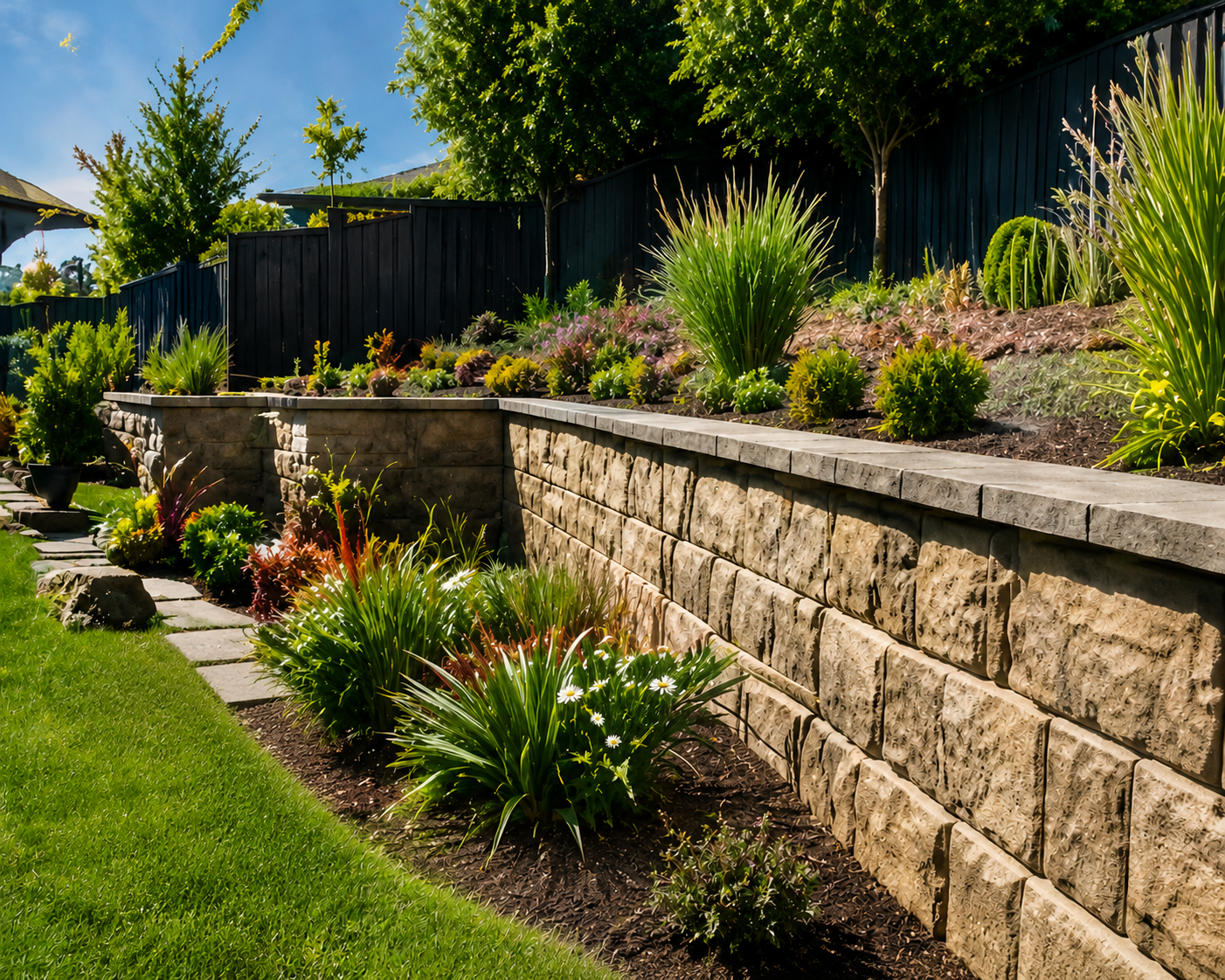
Sloping land is common across parts of Greater Hobart. A steep front lawn can be difficult to mow and heavy rain can move soil or mulch downhill.
A retaining wall in Hobart can help turn a difficult slope into more manageable levels.
Depending on the site, retaining walls can create:
Retaining walls also need proper drainage behind them. The wall itself should never be treated as a substitute for solving water movement on the site.
A low maintenance front yard can quickly become high maintenance when water flows towards the house, collects beside paths or washes mulch away.
Before installing paving, artificial grass, retaining walls or new garden beds, understand where water naturally moves across the property.
Useful design measures may include:
Hobart's water sensitive urban design guidance supports landscaping that manages rainfall more thoughtfully rather than treating water as an afterthought.
Putting thirsty plants beside drought tolerant plants makes watering harder than it needs to be.
Instead, group plants according to their water and sunlight needs. This allows each garden zone to be watered more efficiently.
Once suitable plants are established, deep and less frequent watering can encourage stronger root systems compared with frequent shallow watering, depending on the plant and soil.
Drip irrigation can also deliver water directly to planted areas while reducing unnecessary watering of paths and hard surfaces.
Untidy edges can make an otherwise good front garden look unfinished.
Clear edging between lawn, mulch, pebbles and paving helps stop materials from spreading into each other.
Good edging can also reduce the time spent trimming grass around garden beds.
For a modern front yard, use a limited number of materials and repeat them throughout the space. Too many different borders, colours and textures can make a small area feel busy.
Some Hobart properties are far more exposed than others. Front yards on elevated sites or near the coast may experience strong winds that dry soil and damage unsuitable plants.
On exposed sites:
The exact plant choice should depend on the individual site rather than a generic plant list.
Some properties around Hobart are in or near bushfire prone areas. If that applies to your property, low maintenance landscaping should also consider bushfire safety.
Tasmania Fire Service guidance explains that vegetation, garden layout and the materials used close to buildings can influence bushfire risk.
Where bushfire exposure is relevant, seek current advice for the property before placing dense vegetation, combustible mulch or other landscape materials close to the home.
This is an important example of why a local front yard design should respond to the site rather than follow a one size fits all formula.
A front garden does not need lots of decorative items to look interesting.
One strong feature can create more impact and require less cleaning and maintenance.
This could be:
The rest of the landscape can stay simple and support that focal point.
If you are unsure where to start, a practical Hobart front yard could use this simple structure:
This gives the yard structure without filling every part of the property.
A simple design with climate suited plants, mulched garden beds, clear paving, strong edging and only as much lawn as you actually need is usually easier to manage. The best combination depends on the site's sun, wind, soil, slope and drainage.
Artificial grass can reduce mowing, watering and lawn feeding. It can be useful in smaller or difficult lawn areas, but good base preparation and drainage are important for a lasting result.
Plants that suit local conditions can often require less intervention once established, but not every native plant suits every Hobart garden. Choose species according to the property's soil, sun, exposure and available space.
Mulch is usually useful around planted beds because it helps protect soil and retain moisture. Pebbles are durable and work well in paths, borders, drainage areas and modern feature zones. Many gardens benefit from using both.
Retaining walls, steps, defined planting beds and suitable ground covers can reduce difficult mowing and make access easier. Drainage should be planned at the same time.
The best low maintenance front yard is not the one with the fewest plants or the most paving. It is the one where every part of the landscape has a purpose.
For Hobart homeowners, that means choosing materials and plants that suit local conditions, reducing awkward lawn areas, managing slopes and drainage properly and keeping the overall design simple.
If you are planning a new front yard or a larger outdoor transformation, explore our landscaping services in Hobart to see how artificial grass, retaining walls, concrete paving, mulch, pebbles and other practical landscape features can work together.
Looking for professional landscapers near me in Hobart? We deliver outstanding landscaping services in Hobart, tailored to your needs. Contact us today for a free consultation, and let’s create a beautiful outdoor space together.
0428 251 118 info@bajwalandscaping.com.au 162 Macquarie St, Hobart TAS 7000
All rights reserved, © Bajwa landscaping 2026
Designed by Sobin Sebastian