
A garden pathway does much more than help you move from one part of the yard to another. A well planned path can organise the whole landscape, guide the eye, connect outdoor zones and make a garden feel more finished.
For Hobart homeowners, the right pathway also needs to be practical. Rain, sloping blocks, changing ground conditions and regular foot traffic all influence which materials and layouts work best.
Whether you are planning a front path, a side access route or a feature walkway through the backyard, these garden pathway ideas can help you create a space that feels both stylish and easy to use.
Many gardens feel untidy not because they lack plants, but because there is no clear structure.
A pathway gives the landscape direction. It can:
Good landscaping in Hobart should consider movement through the property as carefully as planting and materials.
Concrete pavers are one of the most versatile choices for garden paths in Hobart. They suit modern homes, traditional gardens and everything in between because they are available in many sizes, shapes and finishes.
A paved path works particularly well for:
For a modern look, larger pavers with simple straight lines can make the garden feel cleaner and more architectural.
If you want a more established or traditional feel, smaller pavers or a patterned layout can add texture without making the path too busy.
For professional installation, explore our concrete paving services in Hobart.
Stepping stones work well when you want the path to guide movement without creating a fully paved surface.
They are especially effective through:
Natural stone, concrete slabs and large format pavers can all be used as stepping stones.
The important part is comfortable spacing. Stones should follow a natural walking rhythm rather than being placed only for appearance.
Stepping stones can also make a small garden feel less hard and more open because grass, gravel or planting remains visible between each piece.
Gravel can create a relaxed pathway that works well with native planting, cottage gardens and low maintenance landscapes.
Compared with a fully paved path, gravel usually feels softer and more natural.
It can be useful for:
Local Tasmanian landscaping suppliers commonly recommend compacted base preparation beneath gravel because the base has a major effect on stability and long term performance.
Good edging is also important. Without it, loose gravel can gradually spread into lawns and garden beds.
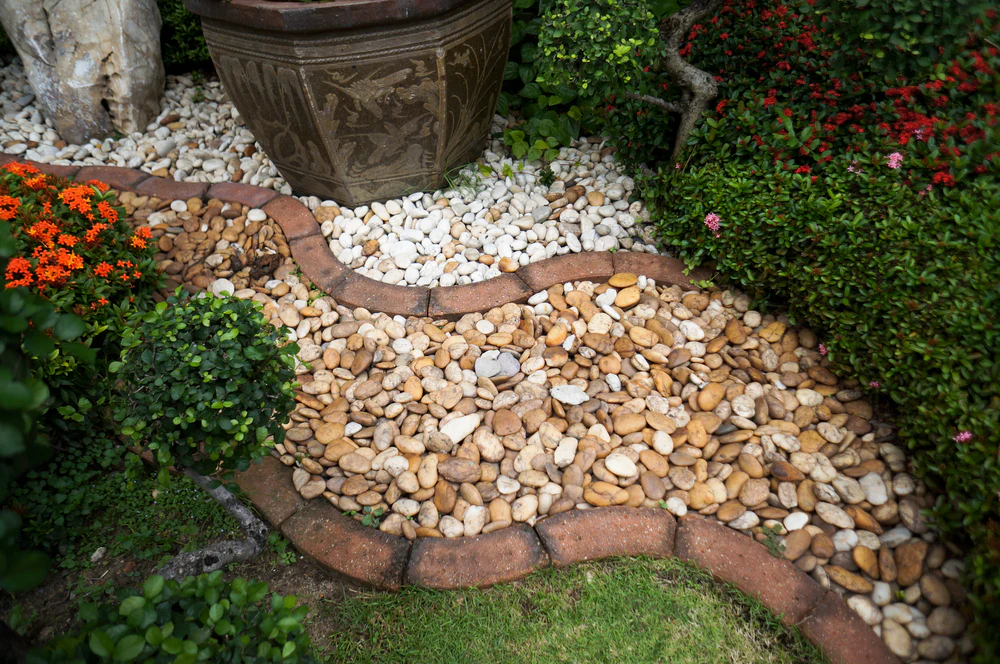
Decorative pebbles can give a pathway a neat, finished appearance while adding texture to the landscape.
Pebbles are often best used in combination with other materials rather than as the only walking surface.
For example:
This approach gives the garden more visual interest without making walking areas unstable.
Our guide on how mulch and pebbles can reduce garden maintenance explains where these materials work best.
Natural stone can create a pathway that feels permanent and connected to the landscape.
Sandstone, bluestone and other natural materials can suit both contemporary and established Hobart homes depending on the finish and layout.
Natural stone works particularly well where the garden already includes:
A West Hobart landscaping project featured by a local Tasmanian landscaper used sandstone paving, stepping stones, edging and planting together to create a more natural and structured outdoor area. This shows how one material can be repeated across different landscape elements to create a consistent design.
Straight pathways create a strong visual line and often suit modern architecture.
They work especially well when connecting:
Straight paths feel organised and direct. They can also make maintenance easier because edging and surrounding garden beds follow clear lines.
If your home has simple architectural shapes, repeating those lines in the pathway can help the garden feel connected to the building.
A curved path encourages people to move more slowly through the garden and can make the landscape feel softer.
Curves work well where you want to guide people around:
They can also create a sense of discovery because the entire path is not visible at once.
The key is keeping the curve natural. Too many small bends can make a path feel awkward rather than relaxed.
One of the strongest modern pathway combinations is large pavers with gravel or pebbles between or around them.
This works because the materials provide contrast:
This design can be particularly effective in contemporary front gardens, courtyards and side passages.
A pathway should not end without purpose. It should lead somewhere useful or visually interesting.
Good destinations include:
If your pathway is part of a larger outdoor project, read our guide to backyard landscaping ideas for modern Hobart homes.
For entertaining areas, our article on the best outdoor flooring options for patios and entertaining areas can help you coordinate path and patio materials.
Your front pathway has a different job from a casual garden trail. It needs to be obvious, comfortable and welcoming.
A good front path should make it clear where visitors need to go without relying on signs or complicated landscaping.
For a polished entrance:
Our low maintenance front yard guide for Hobart homes includes more ideas for combining paths, planting, edging and lawn alternatives.
Side access areas are often narrow and shaded, which can make lawn difficult to maintain.
These areas usually benefit from practical surfaces such as:
Think about what needs to move through the area. If bins, wheelbarrows or garden equipment use the path regularly, a continuous and stable surface will usually be easier than widely spaced stepping stones.
A beautiful pathway becomes frustrating if water collects across it after rain.
Before installation, check:
Proper base preparation is particularly important for paving. Poor preparation can lead to movement, uneven surfaces and water collecting in low areas.
Edging is one of the details that separates a neat path from one that quickly becomes messy.
It can:
Steel, timber, concrete and masonry edging can all work depending on the style of the garden.
Many Hobart properties have sloping or uneven land. In these gardens, pathways and retaining walls often need to be designed together.
A retaining wall in Hobart can create level garden areas while the pathway provides safe movement between them.
On sloping sites, a path may also include:
Planning these elements together generally creates a cleaner result than adding a path after the rest of the landscape is complete.
Outdoor lighting can improve visibility and make a pathway feel more inviting in the evening.
Useful options include low level lights beside the path, step lighting and subtle lighting near planting.
The goal is to make the route easy to follow without making the garden unnecessarily bright.
There is no single material that is best for every Hobart garden.
Ask these questions before deciding:
Concrete paving is usually a strong choice for main routes and front entrances. Stepping stones are ideal for informal garden movement. Gravel and pebbles can create softer, lower maintenance secondary paths when the base and edging are prepared properly.
It depends on the location and how the path will be used. Concrete pavers work well for stable, high traffic routes. Stepping stones suit informal paths, while gravel and pebbles can work well in secondary garden areas when installed over a suitable base.
They can be relatively easy to maintain, but they still need occasional raking, weed removal and topping up. Good edging and base preparation make a major difference.
Yes. Stepping stones can create an attractive route through lawn while keeping more of the garden green. They should be installed securely and positioned at comfortable walking intervals.
For a main front entrance, pavers usually provide a firmer and more predictable walking surface. Gravel can work well for informal paths or as a decorative material beside stepping stones.
Use simple lines, larger format pavers, restrained colours and a limited material palette. Pairing concrete pavers with gravel, pebbles or structured planting can create a clean contemporary look.
The best garden pathway is not simply the one that looks good in a photo. It should make the garden easier to move through, easier to maintain and more connected.
For Hobart homes, that means considering drainage, slopes, material durability, garden style and how the path connects with the rest of the landscape.
If you are planning new garden paving in Hobart, stepping stones or a wider landscape transformation, Bajwa Landscaping can help bring the different parts of the outdoor space together.
Explore our concrete paving services, mulch and pebble landscaping, or contact us to discuss your garden.
Looking for professional landscapers near me in Hobart? We deliver outstanding landscaping services in Hobart, tailored to your needs. Contact us today for a free consultation, and let’s create a beautiful outdoor space together.
0428 251 118 info@bajwalandscaping.com.au 162 Macquarie St, Hobart TAS 7000
All rights reserved, © Bajwa landscaping 2026
Designed by Sobin Sebastian